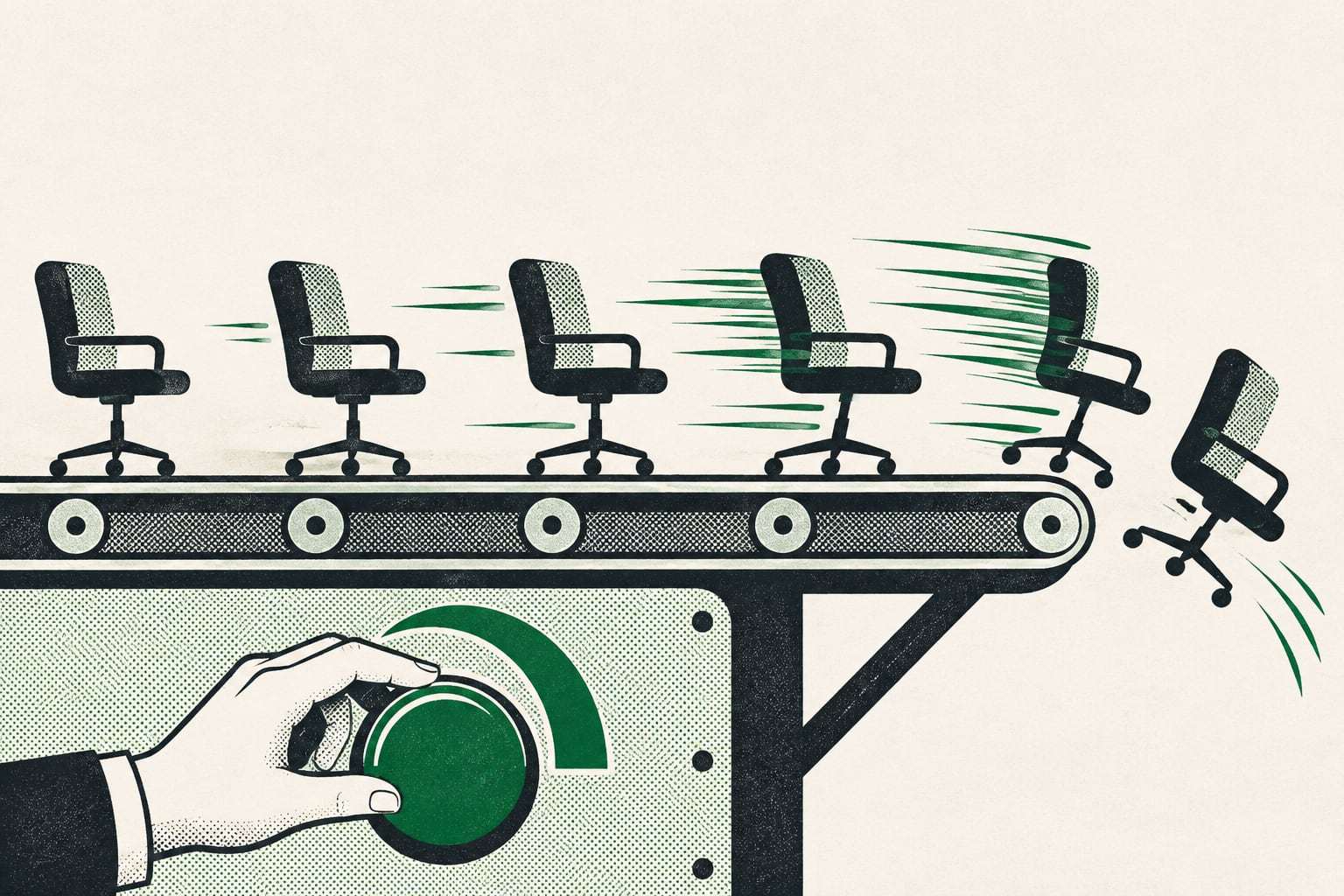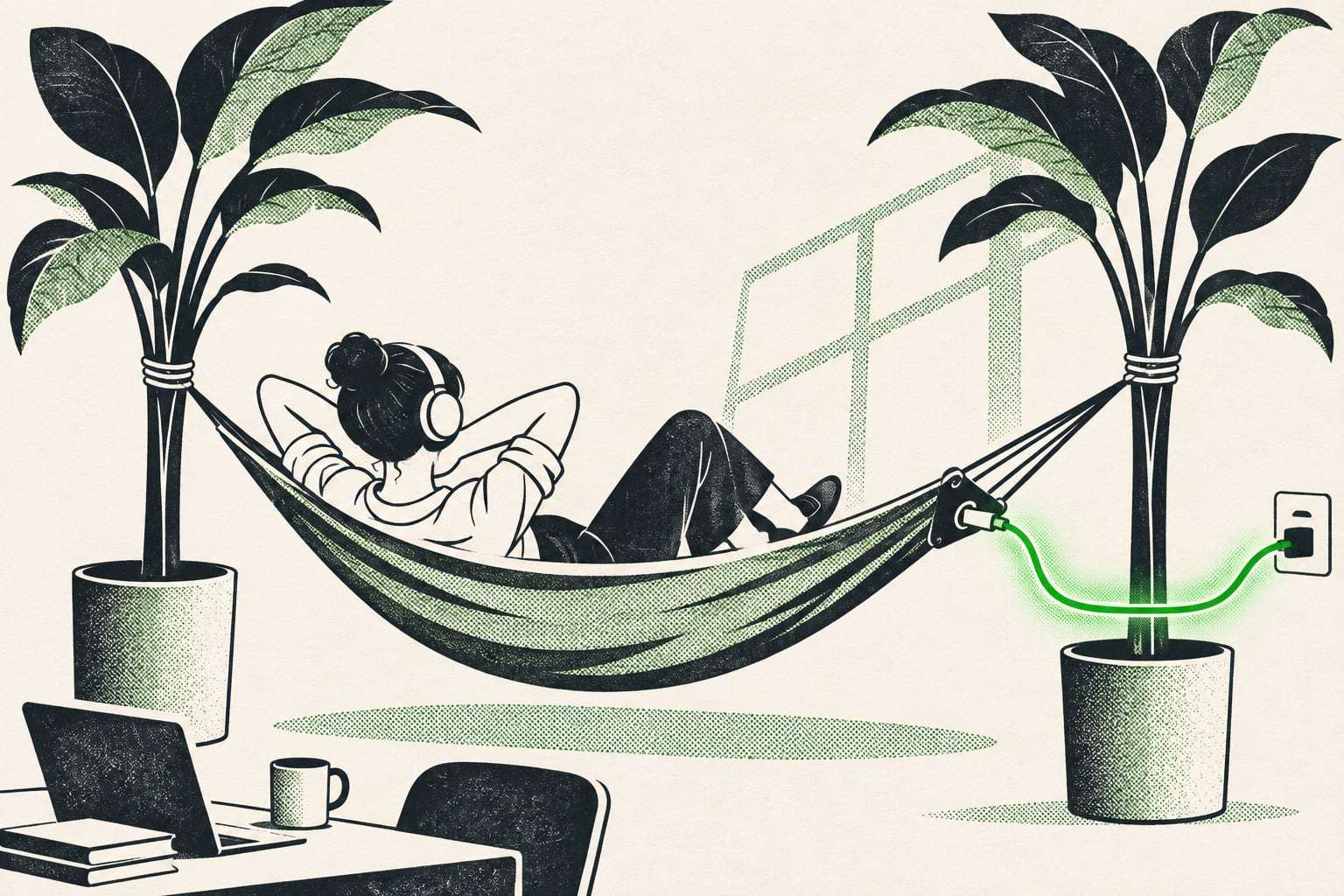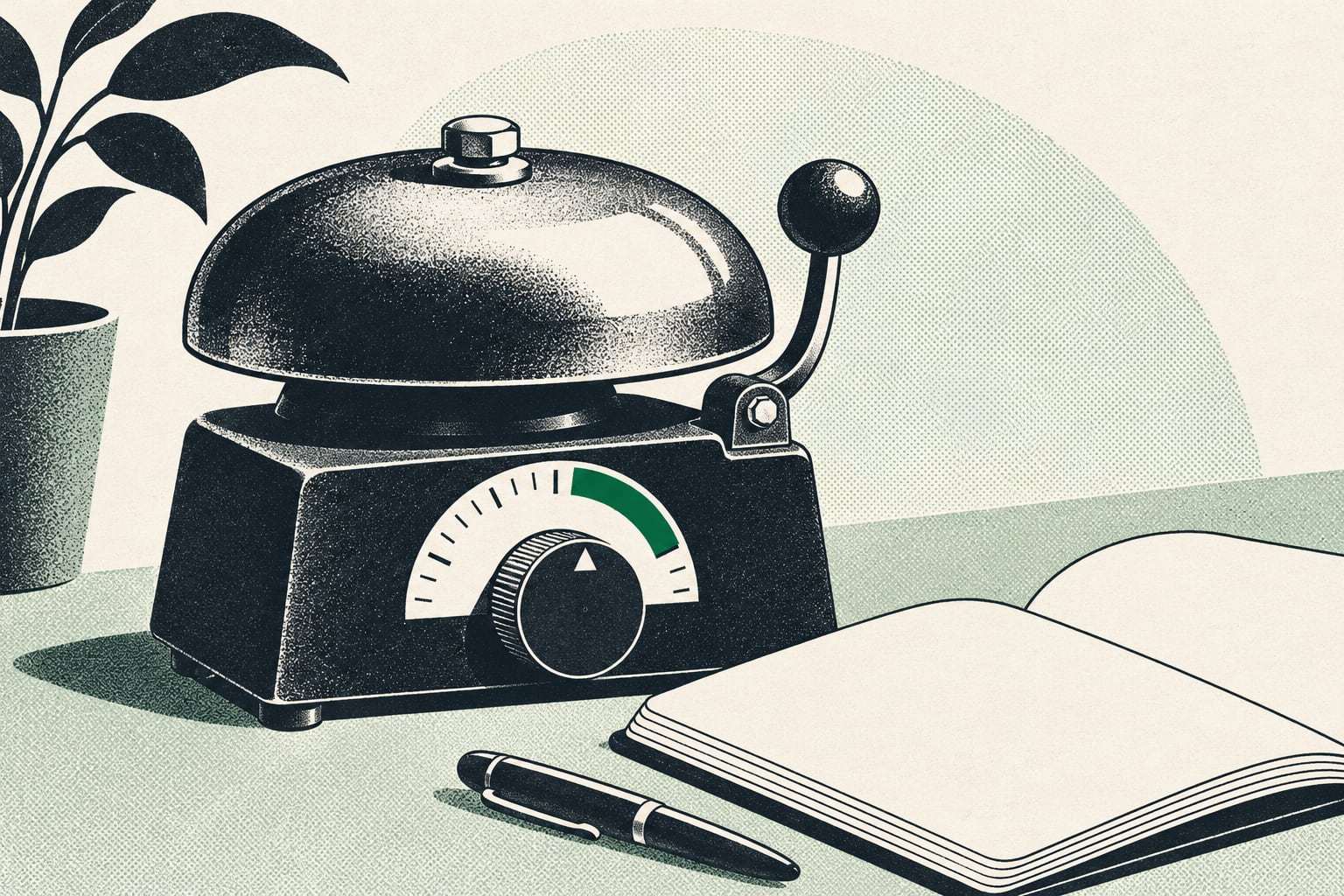
Knowledge work has no natural bell. The day runs as one long stretch of half-attention, with messages filling every gap. Working in rounds (focused blocks with real recovery between them and a clear signal at each end) is a practical way to protect attention and still have energy left when the day ends.
Why focus feels so scarce
Most desk jobs now ask people to do deep work in an environment built for interruption. Chat, email, meetings and a steady stream of new tools all compete for the same hours.
People feel it. A 2026 Henley Business School survey of about 2,900 UK workers found 61% felt unable to keep up with the pace of change at work. More hours will not close that gap. Better-protected hours might.
That is the idea behind rounds. Instead of a 10-hour day of constant availability, you plan a few blocks of real focus and protect the breaks between them as carefully as the work.
The aim is to spend fewer hours half-focused, finish the important work earlier in the day, and stop treating exhaustion as proof of effort. Squeezing more out of people is not the point.
What a round looks like
A round has four parts. Skip one and the whole thing leaks.
- A start signal. Close the inbox, set a status, name the one task.
- A focused block. One piece of work, no switching, notifications off.
- An end signal. Note where you stopped and what comes next.
- Recovery. A real break away from the screen before the next round.
The signals matter more than they look. Without a clear start, the block drifts into email within minutes. Without a clear end, the break never happens and the next block starts tired.
Keep the start signal physical and boring: the same mug of water, the same closed tab, the same status message. Repetition is what turns it into a cue.
The end signal deserves the same care. A two-line parking note (“Stopped at section three. Next: check the totals against last quarter”) makes it easy to step away, because you know you can pick the thread up again in a minute.
Three round lengths to try
Different work needs different lengths. Match the round to the task, not the other way round.
| Round | Focus block | Recovery | Works well for |
|---|---|---|---|
| Short | 25 minutes | 5 minutes | A task you have been avoiding, admin, days full of interruptions |
| Standard | 50 minutes | 10 minutes | Writing, analysis, planning, most project work |
| Deep | 90 minutes | 15 to 20 minutes | Design, code, complex problems, anything with a long warm-up |
Start with standard rounds. Two or three a day is a realistic first target for most desk roles. Move to deep rounds once the short breaks are actually happening, not before.
Plan the rounds the afternoon before. Pick the task for each one and put it on your calendar with a name, such as “Draft the board summary,” rather than a vague “focus time.” A named block is easier to defend when someone asks for the slot.
Roles with constant interruptions
Some jobs cannot disappear for 50 minutes: managers, people on support rotas, anyone who unblocks others. For them, rounds work differently.
- Pair up. Two colleagues cover for each other in alternating blocks, so one is always reachable.
- Hold office hours. A fixed 30-minute window, twice a day, for the questions that would otherwise arrive all day.
- Go short. Two or three 25-minute rounds a day are still far better than none.
Put the rhythm on the calendar
Rounds fail when one person tries them alone and the rest of the team keeps pinging. They hold when the team agrees the rules together.
Shared focus blocks
Pick two mornings a week, for example Tuesday and Thursday from 9 to 11 a.m., with no internal meetings. Put them on the shared calendar as a recurring event so nobody books over them.
Response-time norms
Agree what counts as urgent, and how to reach someone in a genuine emergency (a phone call, not a chat message). Everything else waits for the end of the round. Write the norms down in three lines and pin them in the team channel.
Status signals
A plain status such as “In a focus block until 10:50” tells colleagues when you will be back, which makes it easier for them to wait.
Managers go first
If the team lead keeps booking meetings into the focus blocks, the rule is dead within a week. The manager should be the first to set a status, the first to wait for a reply, and the one who moves a meeting when someone books over a block by mistake.
Here is a script for proposing it at your next team meeting:
“I’d like us to try something for two weeks. Tuesday and Thursday mornings, 9 to 11, no internal meetings and no expectation of quick replies. If something is truly urgent, call. At the end of the two weeks we decide together whether to keep it.”
Example: a 70-person software company tries this with one product team of nine. Engineers move code review to the afternoon, support escalations go to a single on-call person during focus blocks, and the team lead stops booking one-to-ones before 11 a.m. The on-call role rotates weekly so nobody loses every morning.
What counts as recovery
A break only helps if it is a break. Some activities refill attention; others just swap one screen for another.
Good recovery between rounds:
- Standing up and moving, even just to refill a water bottle
- Looking at something far away, ideally outside
- A conversation that is not about work
- Eating away from the desk
- Doing nothing at all for five minutes
What tends not to help: scrolling news or social feeds, “quickly checking” email, or starting a smaller task that pulls you straight back in.
Match the break to the round. After a short round, five minutes of standing and looking out of a window is enough. After a deep round, take a proper 15 to 20 minutes: a walk around the block, a snack away from the screen, a chat in the kitchen.
Recovery is easier to protect when it is social. A team that takes a 10:50 break together, even a short one, makes it normal to step away. A team where everyone eats at the keyboard makes stepping away feel like slacking.
For people on shifts or in customer-facing roles, the same principle applies at a different scale. Rounds may be set by the queue or the line, but the break between them still needs protecting, with cover arranged in advance rather than found on the day.
Run a two-week team experiment
Keep the tracking simple and self-reported. No time-tracking software, no screenshots, no monitoring: the point is to learn what helps, not to audit people.
| Days | What the team does | What you track |
|---|---|---|
| 1 | A 20-minute kickoff to agree blocks, norms and status wording | Each person rates their focus from 1 to 5 |
| 2 to 5 | Two standard rounds a day, shared focus blocks on two mornings | Rounds completed per person |
| 6 | A 15-minute check-in on what got in the way | Interruptions by source |
| 7 to 9 | Adjust: move blocks, try a deep round, quiet the noisiest channel | Rounds completed, breaks taken |
| 10 | A 30-minute review and a decision | Focus rating again; keep, change or stop |
At the day-10 review, ask three questions: what did we finish that usually slips, what interrupted us most, and what is the one rule we want to keep? If the team keeps even one rule, the experiment did its job. One protected morning a week is a change worth having.
Plan the experiment away from your busiest weeks. The annual wellness calendar helps you find a quieter window in the work year.
Where to start
Rounds and Recovery is our six-week program on focus and recovery for teams, from $7,800 (indicative). It helps teams set up rounds, agree norms and build recovery habits that fit real calendars and shifts, on site or online. It sits within our corporate wellness programs, alongside longer options such as Fight Camp.
Book a discovery call and tell us which team is most stretched. We will suggest whether to start with an experiment like this one or a full program.