Team building people don’t dread
Inclusive, low-contact challenges that change how your team works together.
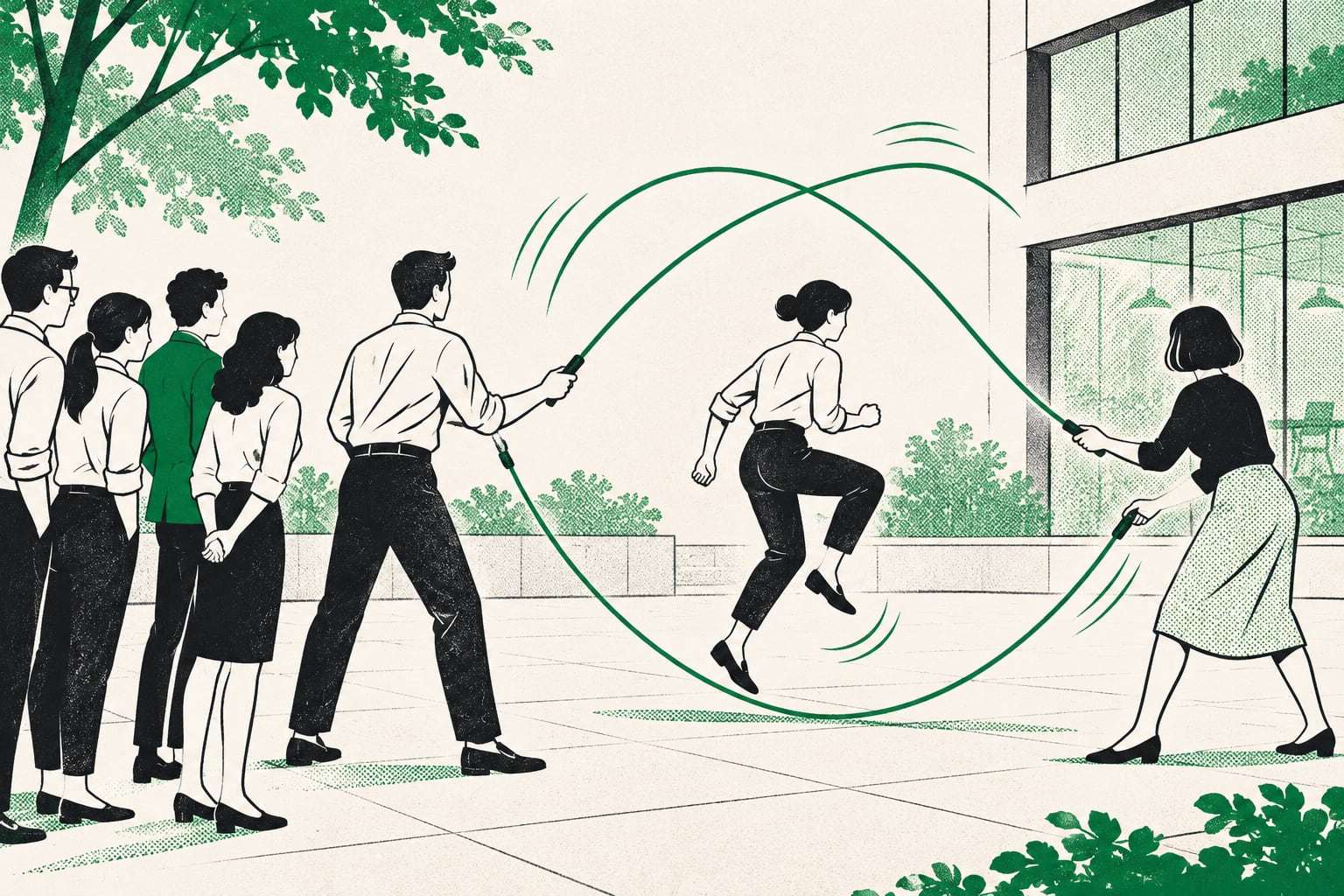
The name is Boxing CEO, but nobody puts on gloves. Our team-building sessions are inclusive, low-contact challenges built around one goal you choose, and each one ends with a debrief that turns what happened in the room into a habit for Monday.
Why forced fun backfires
The U.S. Surgeon General’s 2022 workplace framework names connection and community as one of five essentials for wellbeing. Most team days miss it: they are picked for novelty, enjoyed or endured, and forgotten by Monday. Without a goal and a debrief, nothing carries back to work.
What a good team day leaves
Cleaner handoffs
Teams practice asking for help and passing work on, then name one real handoff to fix that week.
New teams that gel
Merged, new or fast-growing teams learn each other’s strengths in an afternoon instead of a quarter.
Quieter voices heard
Every challenge rotates the lead, so people who rarely speak up get a turn to steer.
Agreements to keep
Each session ends with two or three team agreements, written down and sent to the manager.
An afternoon, a quarter, a crowd
Half-day session
Three or four challenges, a coffee or lunch break, and a 30-minute facilitated debrief.
Team Challenge Series
Monthly 90-minute challenges that build on each other, with a short manager check-in after each.
Large-group event
Rotating stations run by several facilitators, for all-hands days, kickoffs and conference afternoons.
Online session
Breakout rooms and shared boards for teams who rarely share a room, with materials mailed ahead.
What happens on the day
A goal set beforehand
A 30-minute call with the team lead to pick one goal and flag any access needs.
Problem-solving challenges
Build, plan and puzzle tasks in groups of five or six, solved by talking, not speed.
Rotating leadership
Each round names a new lead, so no single person runs the whole afternoon.
Optional, gentle movement
Any movement is light and has a seated version. No gloves, pads, sparring or contact, ever.
A facilitated debrief
Thirty minutes on what helped, what got in the way and what to try at work.
A one-page summary
The team’s agreements, sent to the manager within two business days of the session.
Example: a software company after a merger
A 75-person software company has absorbed a smaller rival, and the two engineering teams still work in separate channels. A half-day session at a downtown Louisville venue mixes them into groups of six for three planning challenges, each with a new lead. The debrief produces three agreements on code review and handoffs, revisited in a Team Challenge Series the next quarter.
Indicative price
Indicative, from$2,400
For a half-day session for up to 25 people, then $65 per extra person; the four-session Team Challenge Series from $8,800. Every proposal is fixed-fee and itemized.
Team building questions, answered
How much does corporate team building cost?
A half-day session for up to 25 people starts at $2,400, then $65 for each extra person, so a 40-person team starts at $3,375. The four-session Team Challenge Series starts at $8,800. Prices are indicative, every quote is fixed-fee and itemized, and travel outside Greater Louisville is billed at cost.
Does team building involve any boxing or sparring?
No. Despite our name, we never run boxing, sparring or contact activities of any kind. Challenges are built around planning, problem solving and communication, and any movement is light, optional and offered with a seated alternative. Nobody needs special clothing, a certain fitness level or to touch anyone else.
What are good team-building activities for work?
The best activities match a goal: planning challenges for teams that drop handoffs, rotating-lead puzzles for groups where a few voices dominate, and story rounds for new or merged teams. We pick three or four for each session and finish with a debrief, so every activity connects back to real work.
How do you make sure everyone can take part?
We ask about access needs before the day and design around them: step-free rooms, seated versions of every task, captions online and quieter roles for people who prefer them. No activity depends on speed, strength, alcohol or sharing personal stories, and anyone can sit out a round without explaining why.
Can you run team building for remote or hybrid teams?
Yes. Our 90-minute online sessions use breakout rooms and shared boards for up to 40 people. Hybrid sessions pair the in-room group with a second facilitator for remote colleagues, so nobody spends the session watching from a screen on the wall. When a challenge needs materials, we mail them ahead.
Where do sessions happen, and how far ahead should we book?
At your office, training room or warehouse break room, or at a venue we book across Greater Louisville and Southern Indiana. We also travel to Lexington, Cincinnati, Indianapolis and Nashville. Three to four weeks’ notice suits a half-day session; allow six weeks for a large-group event or a booked venue.
Plan a team day people want
Tell us about your teams and we will say plainly whether corporate team building is the right place to start.