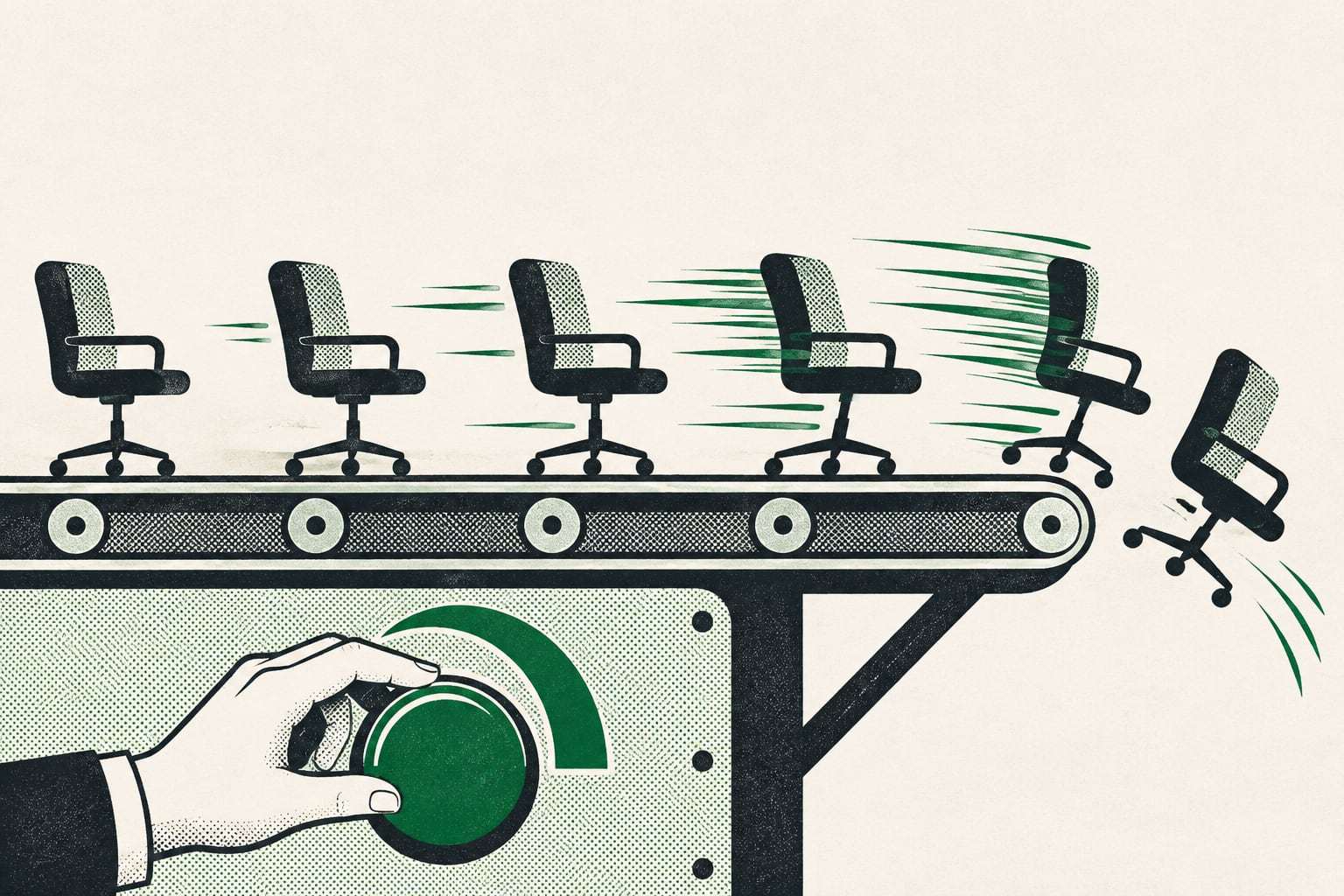
High performers tend to treat rest as whatever is left once the work is done. That gets it backwards. Recovery is a skill you can practice, schedule and protect, and in a demanding role it belongs inside the job, not in the gaps around it.
Why rest feels like losing ground
Capable people resist recovery for understandable reasons.
- Identity. If being reliable is who you are, logging off can feel like letting someone down.
- Visibility. Effort is seen and recovery is private. Late messages get noticed; early nights do not.
- Momentum. Under pressure, stopping feels riskier than carrying on, even when the quality of the work is slipping.
- Reward. Many careers were built on being the person who always answered. Changing that habit can feel like giving up the thing that got you promoted.
None of these are character flaws. They are a predictable response to cultures that reward availability. That is why recovery has to be designed into the week rather than left to willpower at 9 p.m.
There is also a quieter cost. When the most senior or most capable person never stops, everyone below them learns that stopping is a risk. Their recovery problem becomes the team’s.
Four kinds of recovery
Recovery is more than sleep and vacation. It comes in at least four forms, and most people lean on one while neglecting the rest.
| Kind | What it gives you | A 10-minute version | A weekly version |
|---|---|---|---|
| Physical | A change from long sitting or standing | A walk outside, a stretch between calls | A class, a long walk, a game with friends |
| Detachment | A real break from thinking about work | Closing the laptop and leaving the room | An evening with no work device |
| Social | Time with people who are not the work | A coffee with a colleague, no agenda | A standing dinner with friends or family |
| Mastery | Absorbing attention in something new | Ten minutes of an instrument or a language | A class or project unrelated to your role |
Look at last week. Which column is empty? That is the one to schedule first.
Detachment is usually the hardest for high performers, because the phone travels with them. A practical fix is a physical boundary: the work phone stays in a drawer, a bag or another room from a set hour. It sounds small. In practice it is the difference between an evening off and an evening on standby.
Mastery is the most overlooked. Learning something with no connection to your job, such as a language, an instrument or a craft, absorbs attention completely and leaves no room for the inbox. It also gives you a place to be a beginner, which is restful in its own way for people who are expected to have answers all day.
Build it in at three scales
Daily: a shutdown routine
Ten minutes at the end of the workday, every day:
- Write down what you finished.
- List the first task for tomorrow.
- Glance at tomorrow’s calendar for surprises.
- Close every work tab and app.
- Say or write a closing line: “Done for today.”
The routine is the bell at the end of the round. It tells your attention, clearly, that work has stopped for the day, and it removes the low hum of open loops that keeps people checking messages after dinner.
If something truly urgent arrives after shutdown, deal with it, then run the routine again before you close the laptop. The point is a clean ending, not a perfect record. Over a few weeks, notice how often “urgent” turns out to mean “could have waited until 9 a.m.,” and share that with whoever is sending it.
Weekly: one protected evening, one long block
Choose one evening with no work device at all, and one 90-minute block for deep work during the week. Defend both the way you would defend a client meeting. If one gets moved, rebook it the same day rather than letting it lapse.
Spend 15 minutes on Friday afternoon placing next week’s recovery before the meetings arrive: the protected evening, the long block, a lunch away from the desk on your heaviest day. Recovery booked first survives; recovery fitted in later rarely does.
Quarterly: a reset after every peak
After a launch, a quarter close or a busy season, plan a quieter week: fewer meetings, no new initiatives, one full day off. Put it in the plan before the peak starts. Added afterward, it never happens.
A reset week usually includes:
- No new projects or initiatives launched
- Recurring meetings cut by half, with the rest made optional
- One full day off, taken by the whole team where cover allows
- A 30-minute look back: what drained us, and what would we change next time
Example: a managing partner at a 60-person law firm blocks the Friday after every trial or major closing as a reset day. Associates on the matter get the same day. The firm’s calendar shows the dates months ahead, so clients and colleagues plan around them.
What leaders signal by logging off
For executives and senior managers, recovery is never private. Teams read the boss’s calendar and message times closely, and copy them.
- Use scheduled send for anything you write after hours.
- Tell your team when you are offline and who is covering.
- Take your full vacation, and do not check in “just once.”
- Ask direct reports about their recovery in one-to-ones, not only their output.
- Mention your own recovery in passing: the evening you were offline, the walk you took at lunch.
A message to send before a week away:
“I’m out Monday to Friday and won’t be reading messages. Our operations lead is covering urgent decisions and can reach me in a true emergency. Everything else can wait until I’m back, and I’d rather it did.”
The last sentence matters. It gives people explicit permission not to copy you in, which a plain out-of-office never does.
Make recovery a team habit
Personal routines help, but they are fragile on a team that runs hot. The next step is to make recovery something the team plans together rather than something each person negotiates alone.
Add one recovery question to every one-to-one. Rotate through these:
- “When did you last have an evening fully off?”
- “What is the heaviest week coming up, and what comes after it?”
- “Is there anything you are carrying that someone else could cover?”
- “Are you taking your breaks? If not, what gets in the way?”
Then fix the system around the answers. Build cover rotas so nobody is the only person who can answer a question. Plan vacations a quarter ahead, so peaks and absences do not collide. And when someone does take a full week off, make sure their work is covered rather than waiting in a pile for their return.
When rest stops working
Sometimes rest no longer refills the tank. Watch for these signs in yourself and your team:
- Weekends no longer feel restoring.
- Monday dread starts on Saturday afternoon.
- Cynicism about work that used to matter.
- More hours to produce the same output.
- Vacations that take most of the week to settle into and wear off within a day of returning.
They overlap with how the World Health Organization describes burn-out: a syndrome resulting from chronic workplace stress that has not been successfully managed, with exhaustion, increased mental distance or cynicism about one’s job, and reduced professional efficacy.
If you recognize them, talk to your EAP or a licensed clinician, and look hard at the work as well as your habits. Better recovery cannot outrun a workload that is simply too large. The team burnout risk check is a useful way to open that conversation with your team.
Where to start
Teams can build these habits together in Rounds and Recovery, our six-week program on focus and recovery, from $7,800 (indicative). For senior leaders, our executive wellness service includes one-to-one coaching through the CEO Performance Partnership, from $3,200 per month with a six-month minimum, and the Executive Reset Retreat, two and a half days away from the role, from $4,800 per executive with venue and lodging at cost (indicative).
Book a discovery call to talk about where recovery is breaking down, in your team or in your own calendar.