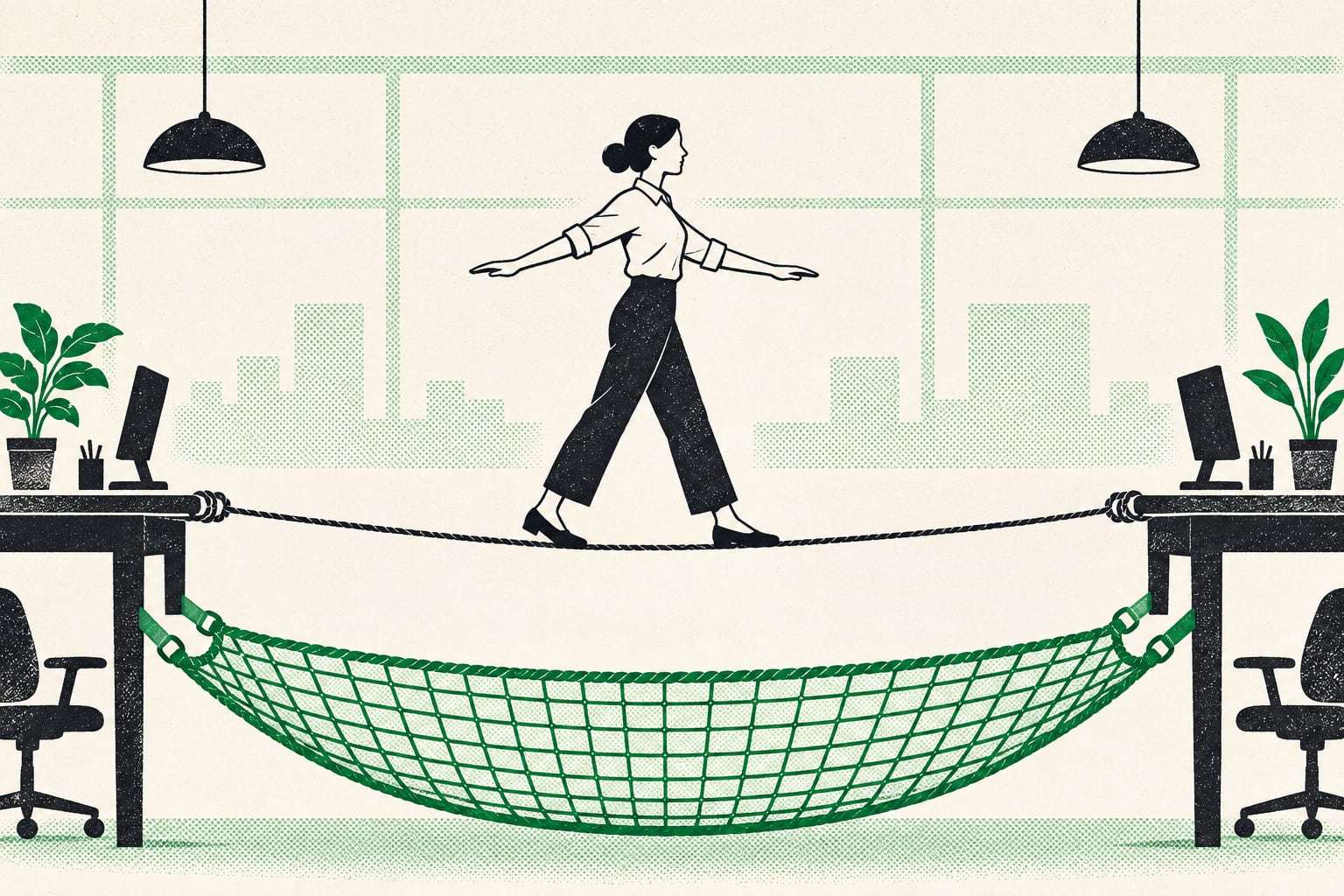
Psychological safety does not live in an offsite exercise or a values poster. It is decided in ordinary moments, the standup where a deadline slips, the meeting where the newest person disagrees, the late-afternoon message with bad news, and in how a manager responds each time. Get those moments right on an ordinary Tuesday and the culture follows.
What it is and isn’t
Psychological safety is a shared belief on a team that you can speak up, ask a question, admit a mistake or disagree without being embarrassed or punished for it. It belongs to the team rather than to any one person, and the leader’s responses shape it more than anything else. Our workplace wellbeing glossary defines it alongside related terms such as presenteeism and job crafting.
It is often confused with comfort. The table shows the difference.
| It is | It isn’t |
|---|---|
| Raising a risk early without fear of blame | Never hearing criticism |
| Disagreeing with the manager in the meeting | Everyone agreeing to keep the peace |
| Admitting a mistake while it can still be fixed | Lower standards or no accountability |
| Asking a “basic” question in front of peers | Avoiding hard conversations |
| Delivering bad news while there is time to act | Being nice instead of being clear |
High standards and psychological safety work together. Standards tell people where the bar is. Safety lets them say when they are falling short of it, while there is still time to do something about it.
The practical case is simple. Problems are cheapest to fix when they are small, and they are only small at the moment someone first notices them. A team that hides problems until they are obvious pays for each one several times over: in rework, in overtime and in the trust it takes to rebuild.
Five moments on a Tuesday
Here is an ordinary day for a team manager, and the five moments in it that decide whether people will speak up next time. None of them takes more than a minute.
9:00 a.m. The standup slip
Someone says their part of the project is two days behind. The reflex is a sigh, or a “how did that happen?” in front of the group.
Try: “Thanks for flagging it now. What do you need to get it back on track, and who can help?”
10:30 a.m. The mistake
A coordinator realizes an invoice went out with the wrong amount. How you respond in the first ten seconds is remembered for months.
Try: “Good catch. Let’s fix it first and look at why it happened later, so it doesn’t happen again.”
Then hold the later conversation, and keep it on the process rather than the person. If the review never happens, people learn that “later” means “never”, and the next mistake stays hidden.
1:00 p.m. The disagreement
In a planning meeting, the newest person on the team says the timeline won’t work. Everyone else looks at you.
Try: “Say more. What would you change?”
If they turn out to be right, say so in the room, in front of the people who saw them take the risk.
3:30 p.m. The bad news
A client is unhappy, and your team lead has to tell you. When messengers get blamed, the next piece of bad news arrives late, or not at all.
Try: “I’m glad I heard this from you today rather than from the client next week. Walk me through it.”
4:45 p.m. The request for help
Someone admits they are overloaded and something has to give.
Try: “Thank you for saying it. Let’s look at your list together and decide what moves.”
Then actually move something. Sympathy without a change in workload teaches people that asking is pointless.
Habits for a manager’s week
The moments matter most, but a few weekly habits make the right response easier to reach for under pressure.
- Speak last in meetings. Ask for views before giving yours, starting with the newest or quietest person.
- Admit one mistake a week. Out loud, briefly, with what you learned. It gives everyone else permission.
- Thank the messenger. When someone brings a problem early, say thank you before anything else.
- Close the loop. Tell people what happened to the idea or concern they raised, even when the answer is no.
- Ask a real question in one-to-ones. “What’s getting in your way this week?” beats “How’s it going?”
- Watch your first second. People read your face before your words. Practice a neutral, curious reaction.
These habits are hardest to keep when a manager is stretched, which is exactly when they count. Many managers are stretched right now: Gallup’s State of the Global Workplace report found manager engagement fell from 27% to 22% in 2025. A manager running on empty reaches for the sigh, not the question. Supporting managers is part of building psychological safety, not a separate project.
A 30-minute team conversation
Once a quarter, give the team a short meeting to set its own norms for speaking up. An agenda that works:
| Minutes | What happens |
|---|---|
| 0 to 5 | The manager explains the purpose and goes first, naming one kind of news they find hard to hear |
| 5 to 15 | Pairs discuss when it has been easy to raise something here, and when it has been hard |
| 15 to 25 | The group agrees two or three norms, such as “bad news by noon” or “disagree in the room” |
| 25 to 30 | Agree how you will remind each other, and when you will review the norms |
Write the norms where everyone can see them, including remote colleagues, and revisit them next quarter.
Repair the moments you miss
Every manager gets some of these moments wrong. You sighed at the standup, or asked “who did this?” before “how do we fix it?”. What builds trust is how quickly you repair it.
“This morning, when you told us the release was late, I reacted badly. That wasn’t fair, and I want you to keep telling me early. Thank you for raising it.”
Repair works best on the same day, and in public if the moment was public. Keep it short, take responsibility without a “but”, and do not ask the other person to reassure you. A manager who repairs openly shows the team that mistakes, including the manager’s own, are survivable here.
How to tell if it’s working
You cannot see psychological safety directly, but you can see what it produces.
- Bad news arrives earlier, and from more people.
- Junior staff ask questions in meetings, not only afterward.
- Mistakes are reported by the person who made them.
- Disagreement happens in the meeting instead of in the corridor after it.
- People ask for help before a deadline, not after it has passed.
To track it over time, add two statements to a quarterly pulse survey, rated from strongly disagree to strongly agree:
- “I can raise a problem with my manager without worrying about how it will land.”
- “On this team, people admit mistakes openly.”
Report results only for groups of ten or more, so answers stay anonymous. Look at the trend over three or four quarters rather than reacting to a single score.
If scores fall, resist any urge to find out who answered what. Share the result with the team, say what you think it might mean, and ask what would help. That response is itself a test of psychological safety, and the team will be watching how you handle it.
Example: a hospital unit’s shift huddle
Example engagement. A 32-bed medical unit holds a five-minute huddle at every shift change. The weigh-in finds newer nurses rarely raise concerns in the huddle and save them for a trusted colleague afterward. The game plan trains charge nurses to open with “What worries you about this shift?”, thank every answer and report back at the next huddle on what was done. The scorecard tracks the two pulse statements above and the number of concerns raised in huddles each month.
Where to start
This week, pick the one moment from the five above that you find hardest, and decide in advance what you will say when it comes. Then choose one weekly habit and keep it for a month before adding another.
If you want every manager building these habits together, The Corner, our manager enablement program, runs six sessions for a cohort of up to 16 managers, with practice on real conversations between sessions, from $14,000 (indicative). Shorter, single-topic sessions are available through our leadership workshops for managers. To talk about your teams, book a discovery call.