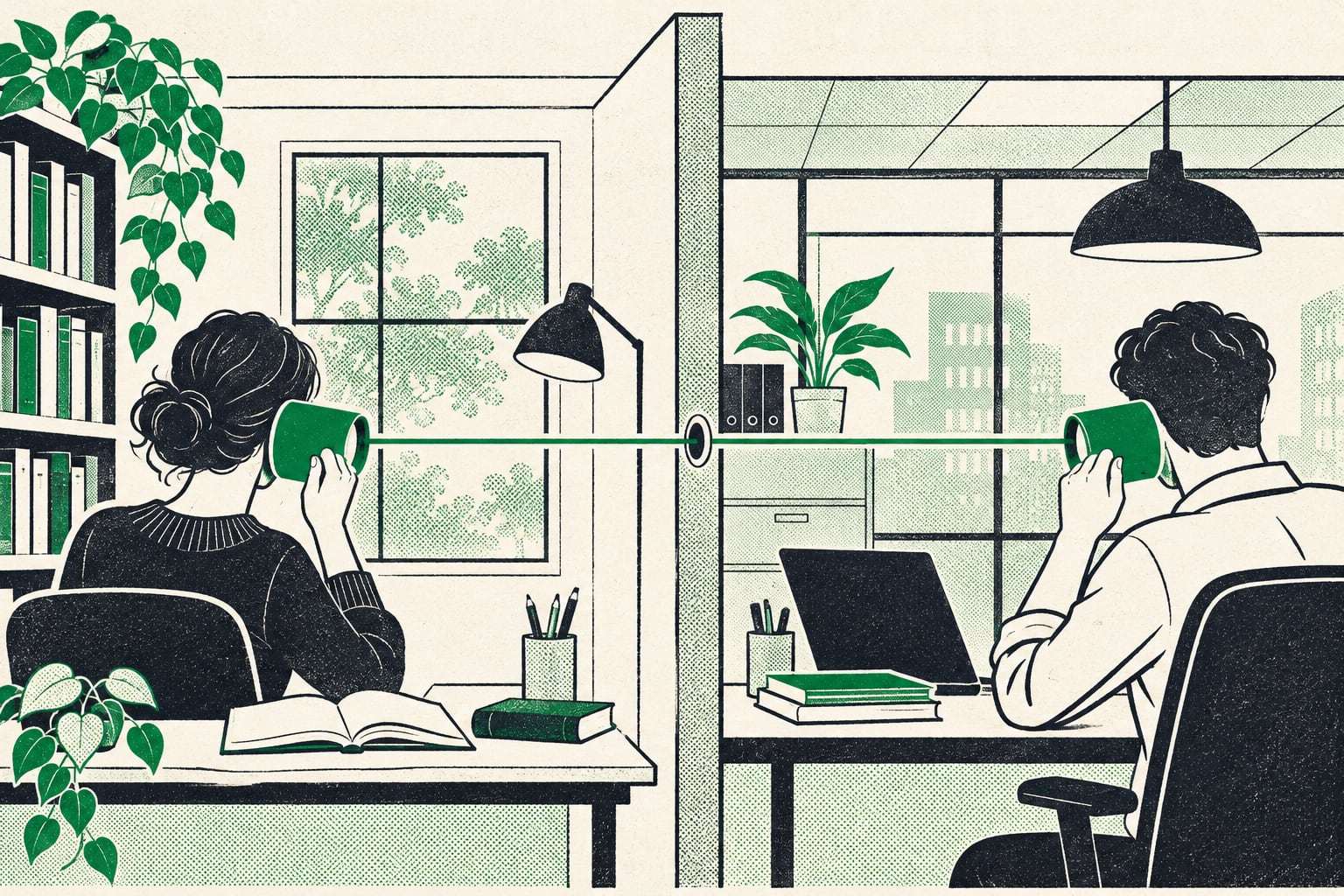
Most wellness programs are designed for people with a desk, a company inbox and a lunch hour at noon. Frontline and shift workers have none of those, so they get a poster in the break room and a webinar they cannot attend. Wellbeing for the floor has to be built into the shift itself, through the schedule, the break, the handover and the supervisor, and delivered where and when people work, on paid time.
Why desk-shaped programs miss the floor
The gap is about design, not interest. A lunch-and-learn at noon misses the night shift entirely. An app assumes a work phone and the time to use it. An email newsletter assumes a work email address that many frontline employees do not have or never check.
Even when frontline workers can join, the format often fits badly. Sitting for an hour is a hard thing to ask of someone who has to cover a line, a dock or a ward. A session that runs past a break means a colleague covers, and everyone notices who does.
There is also a fairness problem. When head office gets the yoga, the speakers and the catered lunch, and the warehouse gets a leaflet, the program sends a message about whose wellbeing counts. Frontline teams read that message clearly.
Start with the schedule
For shift workers, the schedule shapes wellbeing more than any session can. William Fleming’s 2024 study for the University of Oxford’s Wellbeing Research Centre, published in the Industrial Relations Journal, found that workers in individual-level programs were no better off on several wellbeing measures than colleagues who did not take part. Fleming pointed instead to organizational changes, including scheduling and management practices.
Five schedule questions to answer this month:
- How far ahead are shifts posted? Two weeks is a reasonable floor, and longer is better.
- Do rotations move in a consistent direction, so people are not flipping between early and late every few days?
- How often does someone finish a late shift and start an early one the next morning?
- Can people swap shifts without a manager chasing it?
- Is overtime offered fairly, and is there a ceiling on it?
The answers usually come from a scheduling report your operations team already runs. You do not need a survey to find them.
What a fairer schedule policy says
A short written policy turns good intentions into something supervisors can follow. A starting version:
“Schedules are posted 21 days ahead. Changes within seven days of a shift need the employee’s agreement. Swaps between qualified colleagues are approved by default. Overtime is offered in rotation, and nobody is scheduled for more than one double shift in a week unless they ask for it.”
Adjust the numbers to your operation, then publish the policy where every crew can read it, in every language your teams speak.
Make breaks real
A break that is routinely skipped is not a break. Find out how often breaks are missed and why. The usual answer is that nobody covers the role.
- Plan break cover into staffing, not as a favor between colleagues.
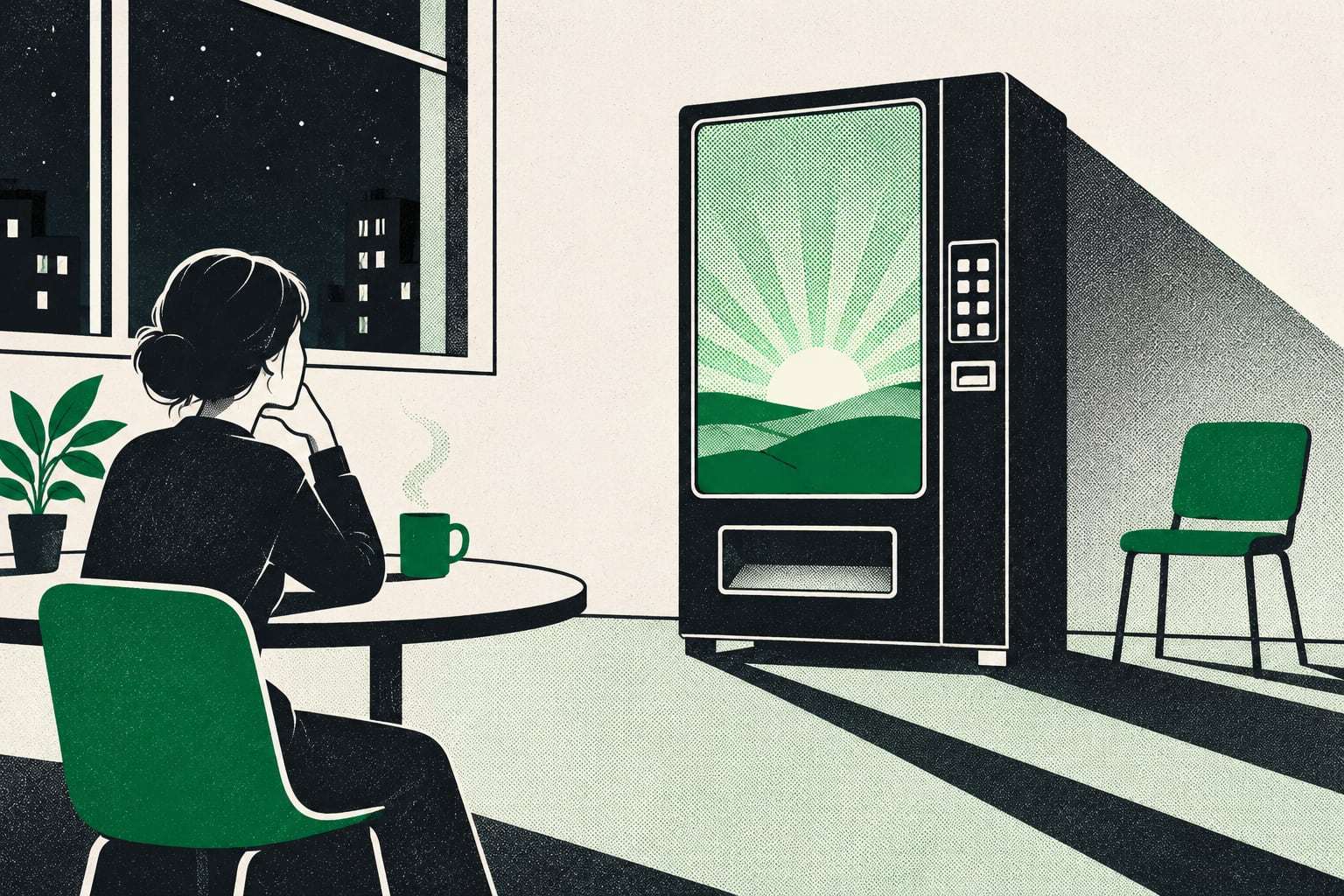
- Fix the break room. Proper seating, light that is not harsh, food beyond the vending machine, and a quiet corner.
- Offer ten-minute recovery formats. A guided breathing audio, a stretch card on the wall, or simply permission to sit outside.
- Protect the break from work. No radios or phones calling people back unless it is a genuine emergency.
The break room is worth a walk-through at 3 a.m. What the night shift sees at that hour, lighting, food and cleanliness included, tells you how the company thinks about them.
A ten-minute break reset
For anyone who wants more than a sit-down, a simple sequence can be printed on the break room wall:
- Minutes 0 to 2: sit down, put the phone face down, and drink some water.
- Minutes 2 to 5: slow breathing, with longer breaths out than in.
- Minutes 5 to 8: three gentle stretches for the neck, shoulders and calves, seated or standing.
- Minutes 8 to 10: eat something, or step outside for daylight or fresh air.
It is optional, it needs no equipment, and it works the same at 2 p.m. or 2 a.m.
Train supervisors for the handover
Frontline supervisors are the corner for their crews, and the handover is their most valuable few minutes of the shift. A supervisor who runs a good huddle and acts on what they hear does more for wellbeing than most programs.
A five-minute start-of-shift huddle:
“Morning, everyone. Three things: what carried over from last shift, what’s different today, and who’s short on anything. Then one question: is anyone running on empty today? Tell me now or catch me after, and we’ll sort out cover.”
Then the supervisor follows through. If someone says they are exhausted, the answer is a practical change, such as a lighter station or a protected break, not a pep talk.
The huddle only works if the company gives supervisors four things: time for it counted in staffing, the authority to move people between stations, a pocket card with the EAP number to hand out, and a monthly half hour with peers to compare notes.
They also need training, because many were promoted for their technical skill rather than for conversations like these. Our manager enablement program, The Corner, trains supervisors to run these huddles, hold short check-ins and spot strain early, in sessions scheduled around their shifts.
Deliver it on paid time
Every desk format has a shift-ready version. The rule underneath all of them is that people take part on paid time, and someone covers their role while they do.
| Desk format | Shift-ready version |
|---|---|
| Lunch-and-learn at noon | 15-minute session at shift change, repeated for each shift |
| Email newsletter | Text message or poster with a QR code, in the languages your teams speak |
| Wellbeing app | Printed pocket card with three practices, plus the app as an option |
| One-hour webinar | Break-room session, recorded in short clips for anyone on leave |
| Wellness day from 9 to 5 | A 24-hour day with a 2 a.m. session for nights |
| Annual online survey | Short pulse on paper or a kiosk, collected by someone outside the line |
Our Wellness Days program is designed to run across every shift, including nights, so no crew gets the leftover version. Live sessions in our corporate wellness programs are scheduled at shift change and held in break rooms or on the floor.
Shift-ready checklist
Before launching anything for frontline teams, check that:
- Every shift, including weekends and nights, gets a live version.
- Participation is on paid time, with cover arranged.
- Materials are short, printed and translated where needed.
- Supervisors know about it before their crews do.
- Nothing requires a company email address or a personal phone.
Measure what the floor notices
Choose measures the crew would recognize as real, and avoid anything that tracks individuals:
- Breaks taken compared with breaks scheduled.
- Overtime hours, and how evenly they fall across the crew.
- Short-notice absences, from HR data, in aggregate.
- Turnover in the first 90 days of employment.
- A three-question pulse each quarter, reported only for groups of ten or more.
Our free team burnout risk check is a useful conversation starter for a supervisors’ meeting. It scores six areas of working conditions, stores nothing and suggests one next step for each.
Example: a family-owned manufacturer on three shifts
Example engagement. A 220-person family-owned manufacturer has strong morale on days and high turnover on nights. The weigh-in finds night breaks are skipped whenever the line runs short, and the night crew hears company news days after everyone else. The game plan funds break cover, trains 14 supervisors in the huddle script and runs a 24-hour wellness day with a 2 a.m. session. The scorecard tracks breaks taken, night-shift turnover and a quarterly pulse.
Where to start
This week, walk the floor at the start of the night shift and ask three people when they last took a full break. Their answers will tell you where to begin, and probably more than your last survey did.
Our approach for frontline and shift-based teams starts with the schedule and the supervisors, then adds sessions that fit the shift. To plan it around your own shift pattern, book a discovery call.